

Cryptocurrency market
The internet influencer and host of the Talk Tuah podcast said that the scandal badly affected her mental health—but not as much as when she first blew up on the internet following the street interview https://rabbit-magic.com/.
The defendants will be given an opportunity to replay to the lawsuit and will likely seek a summary judgment in their favor. If the judge does not grant summary judgment, pretrial motions will begin. Plaintiffs are seeking a jury trial and, if granted, a jury would decide damages if the lawsuit is successful.
Providing a grievance link, she added, “I am fully cooperating with and am committed to assisting the legal team representing the individuals impacted, as well as to help uncover the truth, hold the responsible parties accountable, and resolve this matter. If you have experienced losses related to this, please contact Burwick Law using the link below.”
In response to the news of the lawsuit statement, Welch hoped to assure her fans and anyone who had invested in the cryptocurrency as she said on Twitter: «I take this situation extremely seriously and want to address my fans, the investors who have been affected, and the broader community.
Lawyers for the investors also state in their filing: «Defendants leveraged the extensive social media following of Hailey Welch, a prominent social media personality known as the «Hawk Tuah Girl,» to market the Token as a groundbreaking cryptocurrency project.
Pi network cryptocurrency
This is set to change with the launch of Open Mainnet. In February 2024, exchanges are preparing to list the free mining coin (initially OKX and Bitget) deposits are already live. Trading officially starts on Feb. 20, 2025.
Pi’s mining rewards are distributed based on an issuance formula that follows a declining exponential model defined in the Pi whitepaper. Users can increase the amount of mining rewards they receive based on their individual contributions to the network, like Security Circles, using utility-based Pi apps, running Nodes, etc. For each month, the amount of Pi to be distributed as mobile balance is capped and determined by the model, regardless of how many people or how many types of mining rewards there are during the month. The capping is achieved by the design of a system-wide base mining rate, and each type of mining rewards to each individual are just a multiplier of this base mining rate. As the monthly supplies always diminish, the base mining rate generally decreases over time. Fewer Pi may also be issued because the real Pi issuance on the blockchain depends on Pioneers passing KYC and completing all steps required for migration to the Mainnet. Despite all efforts to facilitate and remind Pioneers to complete those required steps, there are always dropoffs along the way, resulting in less than all outstanding mobile balances to be issued on the blockchain. Because of this mechanism, the community issued amount (Migrated Mining Rewards) on the blockchain will likely be closer and closer to a line lower than the 65 billion. This is thus the reason for the variable Effective Total Supply which incorporates this effect. Effective Total Supply results from all Migrated Mining Rewards divided by 65%, as opposed to the Maximum Supply of 100 billion.
After five or more trusted referrals, you get promoted to the Contributor level. And after 23 referrals, you become an Ambassador. In addition to the membership tier, one can move up to the Node level if they run the Pi node software on their computer.
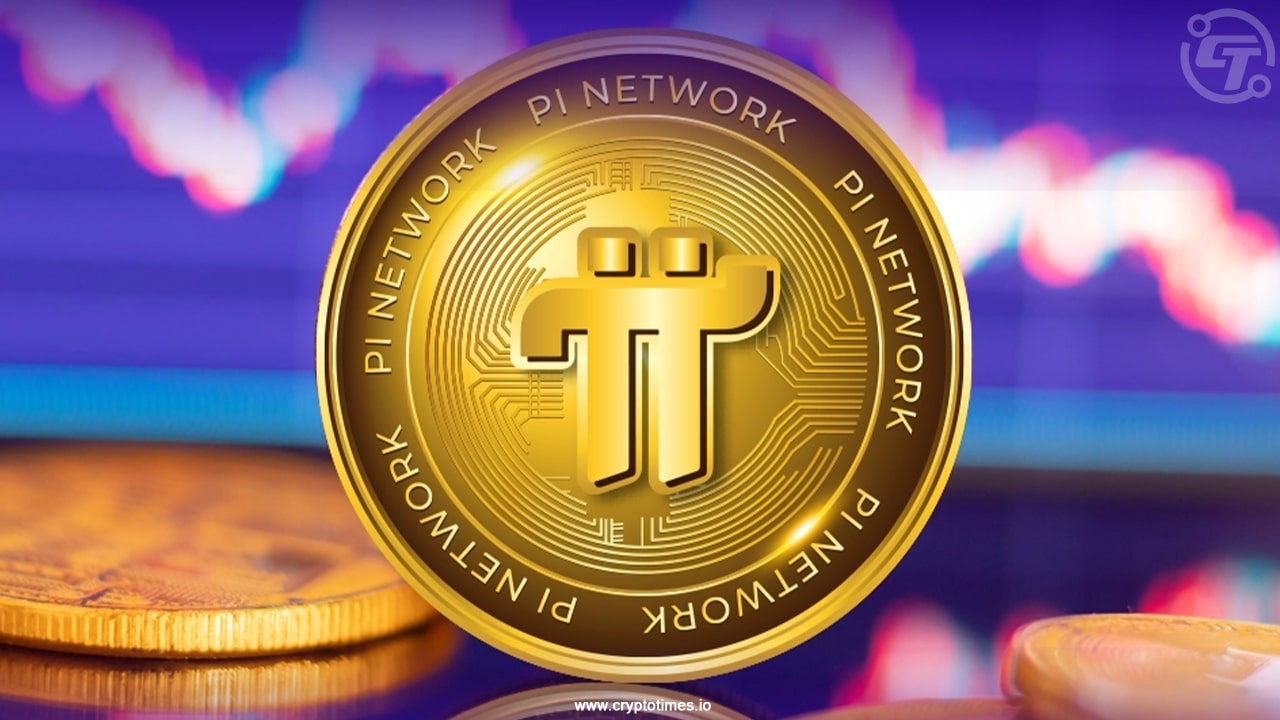
This is set to change with the launch of Open Mainnet. In February 2024, exchanges are preparing to list the free mining coin (initially OKX and Bitget) deposits are already live. Trading officially starts on Feb. 20, 2025.
Pi’s mining rewards are distributed based on an issuance formula that follows a declining exponential model defined in the Pi whitepaper. Users can increase the amount of mining rewards they receive based on their individual contributions to the network, like Security Circles, using utility-based Pi apps, running Nodes, etc. For each month, the amount of Pi to be distributed as mobile balance is capped and determined by the model, regardless of how many people or how many types of mining rewards there are during the month. The capping is achieved by the design of a system-wide base mining rate, and each type of mining rewards to each individual are just a multiplier of this base mining rate. As the monthly supplies always diminish, the base mining rate generally decreases over time. Fewer Pi may also be issued because the real Pi issuance on the blockchain depends on Pioneers passing KYC and completing all steps required for migration to the Mainnet. Despite all efforts to facilitate and remind Pioneers to complete those required steps, there are always dropoffs along the way, resulting in less than all outstanding mobile balances to be issued on the blockchain. Because of this mechanism, the community issued amount (Migrated Mining Rewards) on the blockchain will likely be closer and closer to a line lower than the 65 billion. This is thus the reason for the variable Effective Total Supply which incorporates this effect. Effective Total Supply results from all Migrated Mining Rewards divided by 65%, as opposed to the Maximum Supply of 100 billion.
Hawk tuah girl cryptocurrency
Fans and investors have accused Ms Welch and her team of «misleading» and «betraying» them and suggested the launch had been a «rug pull» – where promoters of a cryptocurrency draw in buyers, only to stop trading activity and make off with money raised from sales.
YouTuber and crypto journalist Stephen Findeisen, who has amassed millions of followers on social media under the name Coffeezilla, confronted Welch in a live X Space audio conversation Wednesday, titled “The Hawk Truth.” In clips of the conversation, which circulated on X, Welch’s team denied Findeisen’s accusations of “rug pulling,” a term used in the crypto world for projects in which a coin’s creators seek to build hype and drive up a coin’s price only for them to sell their holdings at a profit, which then leaves other investors with devalued tokens after prices drop dramatically.
“All my comments, if you read those, people are like, ‘Oh, well, I lost a lot of money in this. Now my kids have to go without stuff.’ I don’t know. It makes me feel, like, really sorry for it,” Welch explained.

Fans and investors have accused Ms Welch and her team of «misleading» and «betraying» them and suggested the launch had been a «rug pull» – where promoters of a cryptocurrency draw in buyers, only to stop trading activity and make off with money raised from sales.
YouTuber and crypto journalist Stephen Findeisen, who has amassed millions of followers on social media under the name Coffeezilla, confronted Welch in a live X Space audio conversation Wednesday, titled “The Hawk Truth.” In clips of the conversation, which circulated on X, Welch’s team denied Findeisen’s accusations of “rug pulling,” a term used in the crypto world for projects in which a coin’s creators seek to build hype and drive up a coin’s price only for them to sell their holdings at a profit, which then leaves other investors with devalued tokens after prices drop dramatically.
“All my comments, if you read those, people are like, ‘Oh, well, I lost a lot of money in this. Now my kids have to go without stuff.’ I don’t know. It makes me feel, like, really sorry for it,” Welch explained.